Showing posts with label Sustainability. Show all posts

Tuesday, November 27, 2018

The Battle for the Future of Farming: What you Need to Know

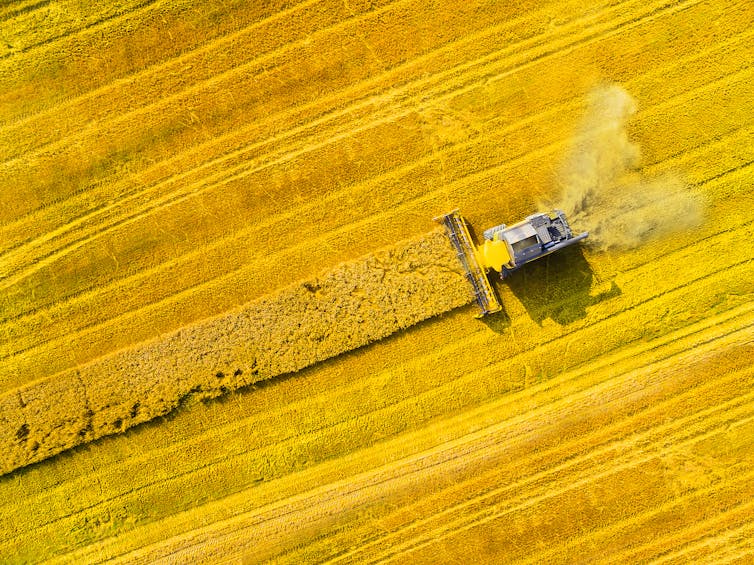
The future of farming is ours to decide. Raggedstone/Shutterstock.com 


It is widely agreed that today’s global agriculture system is a social and environmental failure. Business as usual is no longer an option: biodiversity loss and nitrogen pollution are exceeding planetary limits, and catastrophic risks of climate change demand immediate action.

Most concede that there is an urgent need to radically transform our food systems. But the proposed innovations for more sustainable food systems are drastically different. Which we choose will have long-lasting effects on human society and the planet.

Suggested innovations in food systems can be broadly understood as either seeking to conform with – or to transform – the status quo.



A technological future


Some want to keep the agriculture industry as close to existing practices as possible. This is true of the increasing number of corporate and financial actors who seek to solve the food crisis by developing new technologies. These technologies are envisaged as being part of what is being called the “fourth industrial revolution” (4IR). The “answer” here is thought to lie in a fusion of technologies that blurs the lines between physical, digital and biological domains.

For example, the World Economic Forum is currently supporting agricultural transitions in 21 countries through its “New Vision for Agriculture” initiative. This initiative supports “innovation ecosystems” to re-engineer food systems based on “12 transforming technologies”. In this imagined future, next generation biotechnologies will re-engineer plants and animals. Precision farming will optimise use of water and pesticides. Global food systems will rely on smart robots, blockchain and the internet of things to manufacture synthetic foods for personalised nutrition.

Like previous green revolution technologies in agriculture, this effort is designed by and for powerful agricultural giants. These technological innovations reinforce the concentration of political and economic power in the hands of a small number of corporations. Indeed, the latter have a growing monopoly control over the “12 transforming technologies” protected by patents.
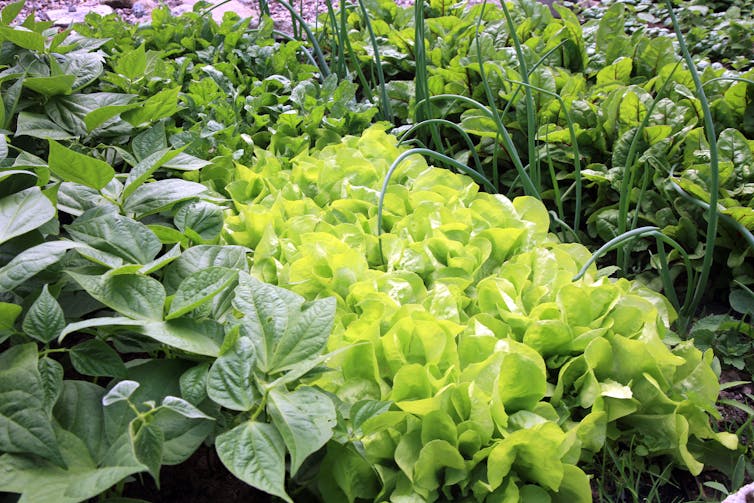

Growing multiple crops at once. Katarzyna Mazurowska/Shutterstock.com


Most notably, the spread of these technologies will expand the technosphere at the expense of the biosphere. Flying robots will pollinate crops instead of living bees. Automated machines will replace farmers’ work on soil preparation, seeding, weeding, fertility, pest control and harvesting of crops.

These hi-tech innovations radically depart from most farming practices. They are moving us towards an increasingly people-less food system. Yet they show a remarkable continuity with the logic of capitalist accumulation – hence their staying power despite their significant risks.

The spread of automated, de-localised and digitalised production and commercialisation of food is part of the “financialisation” of the global food system. Financial markets play an increasing role in controlling food systems from a distance. This generates huge social and human risks. For example, the significant growth in the sale and purchase of financial products linked to food commodities was one of the determining factors in the 2008 world food crisis.
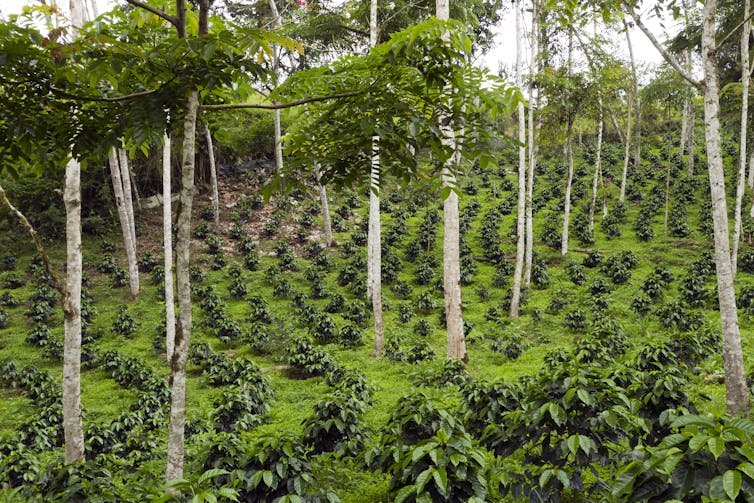

An organic coffee plantation in Ecuador. Dr Morley Read/Shutterstock.com


Another option


But there is an alternative to this future. Agroecology involves the application of ecological principles for the design and management of sustainable agroecosystems. Our research on agroecology focuses on how it can contribute to food sovereignty, which emphasises the democratisation of food systems. Agroecology’s contribution to the Sustainable Development Goals is now recognised.

In contrast to the technological vision described above, agroecological innovations promote circular systems that involve recycling, reuse and combining resources to reduce dependency on external inputs, in particular fossil fuels. They mimic natural cycles and the functional diversity of natural ecosystems. 
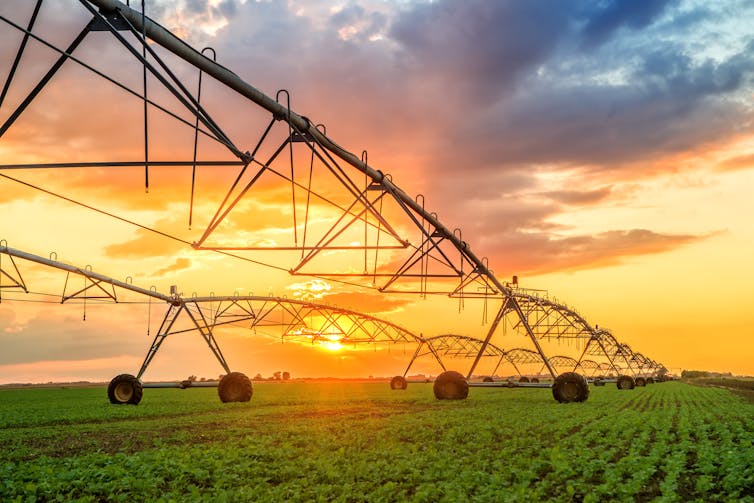

We could be seeing an extension of the megafarms we know today. Igorstevanovic/Shutterstock.com


Farming systems are designed in a way that is based on beneficial interactions between plants, animals and environments. Trees and shrubs might be planted amongst or around crops, say. Or two or more crops might be grown in proximity. Agroecology reduces the dependence of food producers on expensive external inputs, distant commodity markets and patented technologies. This is achieved by relying on appropriate biodiversity to ward off pests and increase farm yields.

At broader scales, agroecology involves circular systems that combine food and energy production with water and waste management. Pollution is minimised and synergies achieved by carefully clustering industries into functional wholes. The re-localisation of production and consumption within territories enhances local economic regeneration and sustainability.

Agroecological innovations in transitions to sustainable food systems are being driven largely from the bottom up by civil society, social movements and allied researchers. In this context, priorities for innovations are ones that increase citizen control for food sovereignty and decentralise power. This is in direct contrast to the monopoly control enabled by 4IR technologies.
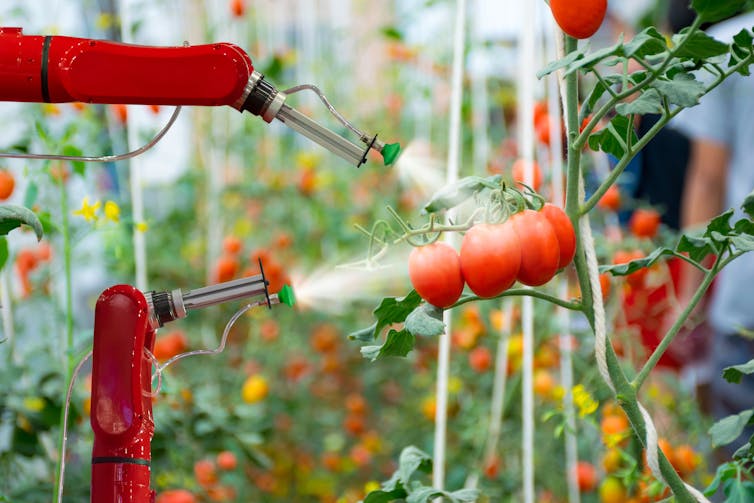

Who needs humans? Kung_tom/Shutterstock.com

Farming systems are designed in a way that is based on beneficial interactions between plants, animals and environments. Trees and shrubs might be planted amongst or around crops, say. Or two or more crops might be grown in proximity. Agroecology reduces the dependence of food producers on expensive external inputs, distant commodity markets and patented technologies. This is achieved by relying on appropriate biodiversity to ward off pests and increase farm yields.

At broader scales, agroecology involves circular systems that combine food and energy production with water and waste management. Pollution is minimised and synergies achieved by carefully clustering industries into functional wholes. The re-localisation of production and consumption within territories enhances local economic regeneration and sustainability.

Agroecological innovations in transitions to sustainable food systems are being driven largely from the bottom up by civil society, social movements and allied researchers. In this context, priorities for innovations are ones that increase citizen control for food sovereignty and decentralise power. This is in direct contrast to the monopoly control enabled by 4IR technologies.

A democratic debate


Government, civil society and private sector representatives will soon meet in Rome at the United Nations Food and Agriculture Organization to discuss the future of farming. Who controls the global governance of innovation will be a hotly debated topic.

But given these highly contested views on innovations for food and agriculture, it is vital that everyone is able to exercise their right to have a say on the future of their food supply. Deliberative and inclusive processes such as citizens’ juries, peoples’ assemblies and community-led participatory processes are urgently needed to decide priorities for food and agricultural innovations. This is all the more important in today’s context of rapid global change and uncertainty.

So. Do you want to live in a world in which artificial food is produced by intelligent robots and corporations that put profits before people? Or one where agroecological innovations ensure we can nourish ourselves and our communities in a fair, ecologically regenerative, and culturally rich way?

Michel Pimbert, Professor and Director, Centre for Agroecology, Water and Resilience, Coventry University and Colin Anderson, Senior Research Fellow, Coventry University

This article is republished from The Conversation under a Creative Commons license. Read the original article.

Monday, February 8, 2016

Rain barrels, green roofs, permeable pavement: better ways to help manage urban stormwater runoff and reduce waste

As meteorologists monitor the El Nino condition currently gaining strength in the Pacific Ocean, Californians look with hope to the much-needed rain and snow it could yield. But if we're going to make the most of the precipitation, we need to put a LID on it.

English: Large bioswayle (raingarden) integrat...
Large bioswayle integrates stormwater runoff treatment with planting feature for neighborhood. (Photo credit: Wikipedia)
LIDs, or low-impact development technologies, mimic pre-urban stream functions. Examples are green roofs that absorb and evapotranspire rainfall; rainwater tanks attached to homes and other buildings; and permeable pavement for roads, driveways and parking lots. Rainwater could even be used in the home for toilet flushing and laundry.

These are just some of the strategies suggested by an international group of experts who recently collaborated on a review article in the American Chemical Society journal Environmental Science & Technology.

Stanley Grant, senior author of the paper and professor of civil & environmental engineering at the University of California, Irvine, brought together academics from three UC campuses (UCI, UCLA and UC San Diego) and Australia's University of Melbourne; water managers from Orange County Public Works; and engineers from consulting firm Michael Baker International to examine how urban population centers could better meet water supply needs while protecting natural stream ecosystems.

"This team offers a key example of the significant role that University of California scientists can play in finding innovative solutions for major state problems," said co-author Lisa Levin, a Distinguished Professor at Scripps Institution of Oceanography. "With drought so pervasive, California cannot afford to waste its precious stormwater; nor can it afford to send contaminants into the ocean. The options addressed in this article tackle both of these issues."

Managing stormwater runoff in urban environments is a challenge for engineers and water officials. During pre-industrial times, rainwater gradually seeped into the ground and, from there, into rivers, lakes and oceans. Humans, however, have replaced forests and grasslands with a lot of impermeable surfaces that send runoff in a torrent directly to the closest waterways. "The massive volumes and pollutants associated with stormwater runoff are a deadly one-two punch for streams and lead to a condition known as 'urban stream syndrome,'" said Asal Askarizadeh, lead author and UCI graduate student in civil & environmental engineering.

Symptoms include erosion, flooding and rising stream temperatures; an imbalance in nutrients, carbon and oxygen in the water; and an increase in unwanted sediments, chemical pollutants and human pathogens.

The antidote, Askarizadeh said, is to harvest and reuse as much of the stormwater runoff as possible and allow a portion to infiltrate into the ground to support streams and groundwater.

"Using LIDs to create this kind of localized, widely distributed approach to stormwater management will require individuals and public agencies to be open to significant change," said co-author David Feldman, professor and chair of UCI's Department of Planning, Policy & Design. "We expect the government to manage our water supply completely, and in some places, it's even illegal to harvest rainwater locally. Laws and habits are going to have to change if we are to adapt to new climate and urban realities."

One of the significant changes the authors argue for is a movement toward distributed infrastructure (rainwater tanks and green roofs) as a complement to the centralized infrastructure (aqueducts, water treatment plants and, more recently, desalination plants) cities have long relied on. "The reason is that in order to protect receiving waters and streams, we need to capture the runoff as close to where it's generated -- for example, your home -- as possible," said co-author Brett Sanders, professor and chair of the Department of Civil & Environmental Engineering at UCI.

"The question then becomes: What do you do with the stormwater once you've captured it?" said co-author Megan Rippy, a UCI postdoctoral researcher in civil & environmental engineering. "Our work provides a blueprint for estimating how much of the captured water should be infiltrated into the ground and how much should be harvested for any purpose that keeps it out of the stream, such as for nonpotable purposes in the home. The ratio of those two volumes depends on local climate and what the landscape looked like in pre-industrial times."

"The bottom line is that these solutions are good for the environment and good for people too; they just require changing habits," Grant said. "For example, over 2 million people in Australia use rainwater from their roofs to flush toilets -- and that makes good sense. Using drinking water to flush toilets is literally washing our future down the drain."

With funding from a National Science Foundation PIRE grant, he and his colleagues were able to spend time in southeastern Australia studying how people there have dealt with their historic drought. "They have had a positive experience implementing LID technologies to manage scarce water resources, and in doing so, they've provided a good example of how universities can work with governments and private-sector entities to come up with solutions to water challenges," Grant said. "And the best part is that after emerging from one of the longest droughts in Australia's history, Melbourne has been voted year after year as the most livable city in the world. We could definitely use some of their magic."

Source: University of Californa - Irvine.


Saturday, January 30, 2016

PVC Pipeline for Life Brings Clean Water to Rural Areas

English: PVC Pressure Pipe Русский: ŠŠ°ŠæŠ¾Ń€Š½Š°Ń П...
PVC Pipe (Photo credit: Wikipedia)
Thanks to partnerships between Save the Children, Water Engineers for the Americas, the Vinyl Institute, and the American Chemistry Council’s Chlorine Chemistry Division, more than 6,000 people across 3 remote villages in Honduras now have access to clean running water for the first time in their lives. Called “PVC Pipeline for Life,” this project has spanned a decade and involved the installation of 3,200 linear meters of PVC pipe (via a donation from the Vinyl Institute), bringing a lifesaving water purification and distribution system to a community in need.
None of this would be possible, however, without PVC pipe. “This is a great example of what PVC pipe can do,” said Susan Wade of the Vinyl Institute. “It is a major material used in clean water delivery, and the fact that it’s durable but also easy to install…this was the perfect material for this situation.”

Česky: PitnÔ voda - kohoutek Español: Agua potable
(Photo: Wikipedia)
Wade continues, “I remember asking the water engineers, of all the available piping materials, why do you choose PVC? And they said, in Honduras, the soil is so acidic that you need something that can withstand that once it’s buried into the ground. This is a perfect application for PVC.”
Because PVC pipe is durable enough to withstand the Honduran soil, it is also relatively resistant to leaks and pipe corrosion. Corrosion can decrease flow in a pipe’s system imposing extra demands to pump water. Plus, plastic pipe manufacturing is resource efficient, typically consuming less energy than alternative materials. So the choice of PVC for this special pipeline project is expected to allow thousands of people gain access to clean water… in an energy-efficient way! Kudos to all those involved for bringing a lifesaving necessity to those in need through the PVC Pipeline for Life!
Source: GreenBuildingsolutions.org


Also checkout the Home Science, LLC Facebook page at https://www.facebook.com/energysmarts/ or our main website at www.HomeScience.us

Related articles

Tuesday, December 9, 2014

Holiday Lighting Tips To Keep You In The Green

English: Decorated House, Lonsdale Drive, Enfi...
(Image: Wikipedia)

‘Tis the season to make spirits bright with holiday lights- but that doesn’t mean you have to go broke paying high energy bills this winter! While decorating the tree, house, or garland, a whole section of lights can go dark – along with holiday spirits, and light outages can be frustrating and time-consuming to repair.

To help reduce the frustration of decorating, the LightKeeper Pros have produced a list of holiday lighting tips- which we’ve reproduced, below. Plus check out these great ways to winterize your home and maximize energy savings via Green Living Ideas.


Holiday Lighting Tips

Measure: To estimate the number of lights needed for your tree, plan on an average of 100 lights per every foot of tree height.

LED vs. Incandescent: LED lights are more expensive than incandescent, but typically last longer. Due to their low voltage, more sets of LED lights can be strung together end-to-end than traditional sets. Be sure to use lights that have the label of an independent testing laboratory such as Underwriters Laboratory (UL).

Inspect: Before stringing lights check for broken bulbs and sockets, frayed cords, burned out lights and loose connections. Replace and repair any damaged light sets. For sets with bulb outages, use a light tester to find and fix the problem in seconds.

Connect: Connect no more than three strands of mini string sets and a maximum of 50 bulbs for screw-in bulbs. Read the manufacturer’s instructions for the safe number of LED strands to connect. Use no more than three light sets on any one extension cord.

Indoor vs. Outdoor: Some lights are only for indoor or outdoor use. Outside lights are exposed to water, so they should be rated for outdoor use. Wrap connections with electrical tape when two or more light strands are being used. Outdoor lights should be plugged into circuits protected by ground-fault-interrupters (GFCIs).

Live and Artificial Trees: To string lights on an evergreen tree, begin at the top of the tree and wind the strands through its center, widening with the tree’s shape. For deciduous trees, work your way up. Wrap lights around the base of its trunk, moving upward in a spiral formation. If you use an artificial tree, choose one that is tested and labeled as fire resistant. Artificial trees with built-in electrical systems should have the UL label.

Replace and Repair Lights: To get the most out of your light sets, do occasional visual checks for any bulbs that are no longer working. Replace those bulbs as soon as possible. If a light set stops working or a section goes dark, use a light string tester to find and solve the issue in seconds.


For those who need more help or have a specific question, Ulta-Lit Technologies, maker of the LightKeeper Pro and LED Keeper testers, has set up a hotline for your pressing holiday lighting questions that’s available 7 days a week between Thanksgiving and Christmas at 888-858-2548.

Source: Green Building Elements. Original article by Dawn Killough.

Friday, May 23, 2014

Green Home Building: Made in America

 
New Postmodern Solaris Green Home
Postmodern Solaris Green Home (Photo credit: Photo Dean)
People throughout the U.S. have set their sights on becoming more environmentally friendly -- especially when it comes to their homes.

Data from a recent Green Builder Media study confirms this trend with nearly 85 percent of respondents showing a positive association with the term "green" and wanting to be known for having a green life.

Whether they know it or not, when specifying U.S.-made green products, builders and homeowners are doing more than just helping the environment, they are also stimulating the economy.

One company that follows this trend of supporting green, U.S. homes is Green Builder Media. For example, its VISION House Series (www.greenbuildermag.com/vision-house) showcases homes built around the country that highlight the latest in green design, building techniques and products, and the advantages each can provide.

"Sustainability doesn't have to equal sacrifice," says Ron Jones, president of Green Builder Media and internationally renowned sustainability expert. "You don't have to give up beauty or quality when you choose a green product -- there is a wide variety of smart, sustainable and cost-effective products made in the United States that are easy for homebuilders and owners to access."


Dwell City Modern Tours Brooklyn
Dwell City Modern Tours Brooklyn (Photo credit: Inhabitat)
Green Builder Media is dedicated to spreading the word about sustainable living and green building to building professionals and consumers throughout North America. At center stage are two companies that are leading the way in green building materials that are made in America:

* Boral Roofing is the nation's largest manufacturer of sustainable, durable and affordable clay and concrete tile roofing systems, and the only provider of clay roof tile that is Cradle to Cradle certified. The products use recycled content and are Energy Star rated.

* Armstrong Flooring has over a century-long history of recycling, sustainable harvesting and environmental stewardship. The company's new line of genuine scraped hardwood, called American Scrape, is made in the U.S. A portion of the sales generated from American Scrape is donated to Homes for our Troops, a non-partisan organization that builds specially adapted homes for injured veterans.


To learn more, visit www.greenbuildermedia.com. The above article was made available from materials provided by NewsUSA.


Enhanced by Zemanta

Friday, November 23, 2012

Reclaimed Items Make My House A Special Place

By Jeff Toye via Greenspiration Home

Door Handle
Door Handle (Photo credit: Sean MacEntee)
Some time back I caught a Greenspiration Home blog about the reclaimed mantle that Trish Holder used in the original Greenspiration Home. The article struck a cord with me because Trish said this mantle, which her husband worked hours to restore, has since become one of her favorite interior features in her home. I totally identified with that feeling, so when she asked to hear from others who had successfully incorporated reclaimed elements into their home, I proudly raised my hand.

I have been a remodeling contractor in Northern New Jersey for three decades. Not only do I use reclaimed building materials in my own home, I also encourage my clients to use reclaimed items whenever feasible. There’s nothing like the touch of character that a reclaimed piece brings to a new or even an old home.

My own home is far from new. In fact, it was built in the late 1700’s, so the materials that I select for it (from flooring to door knobs) are also historic. I even have a garden shed that is made from 99% reclaimed items.

But let me give you the full tour….

A walk from my driveway to my front door reveals the following: Shutters made from reclaimed cedar decking, front entry porch with reclaimed heart pine flooring (still needs finishing), a porch ceiling made of yellow pine bead board, a suspended swing made from cedar trim scraps, and finally a reclaimed 7’ tall front entry door.

Cuisinart SmartPower Deluxe Blender (Google Affiliate Ad)

Once inside you’ll find wide plank pumpkin pine flooring that is mostly original to the home but patched with reclaimed material where needed. An American chestnut handrail, balustrade and newel post salvaged from an 1800’s era farmhouse leads the way to the second floor. A small downstairs hallway is flanked with wainscot paneling, reclaimed from a 1920’s era craftsman style home.  And all over the home you will find an eclectic collection of glass doorknobs salvaged from homes built in the late 1800’s... READ MORE
--------------


A Green Rest Area

By Lina Younes via EPA's Greenversations blog.

Urban Garden.
This past weekend I was walking around Allen Pond Park in the City of Bowie enjoying the beautiful autumnal day. During my walk, I was admiring the migratory birds that had stopped along their yearly trek to warmer surroundings. There were many in the pond, flying, bathing, eating and the like. Luckily, around the Bowie area we have plenty of trees, waterways, and settings that are welcoming to birds and nature’s creatures.

While a visit to a park is a great way to connect with nature in an urban area, you can actually create an environment in your own garden that can be equally inviting to birds and pollinators all year round.  You can achieve this objective through greenscaping techniques that integrate pest management practices and planting native shrubs and trees that will be inviting for birds and wildlife through the seasons.

Certain evergreen shrubs and trees will produce small fruits during the fall at a time when migratory birds in the Northern Hemisphere are starting their journey south. While other flowering plants and trees will produce needed food for birds, pollinators and other wildlife during the spring and summer months... READ MORE
--------------


Energy Saving Holiday Cooking Trivia

Via Energy.gov.

Cooking is an important part of the holiday season. Food brings people together in ways many material gifts cannot. But with winter temperatures creeping in, electricity savings are something to keep in mind, especially during your energy sucking holiday parties with friends and family. Test your energy savings savvy with our Energy Saver kitchen trivia questions!

Q1. What is the most efficient appliance in your kitchen?


Slow Cooker Applesauce
Slow Cooker Applesauce (Photo credit: lynn.gardner)
The answer:  It’s your microwave, believe it or not. That two-minute popcorn machine uses just 1/3 of the wattage your oven at 750–1100 watts on average and can be used for more than just frozen meals, reheating leftovers, and defrosting chicken. In fact, there are entire books dedicated to culinary usage of the microwave. Recipe books such as “A Man, a Can, a Microwave,” have now turned some of your favorite party-pleasing meals and hors d'oeuvres into microwavable treats (think Buffalo wings).  As a general rule, shorter cooking time equals fewer watts, and you're unlikely to use a microwave for anything more than 20 minutes at a time, even with these new age recipes.

Q2.  What kitchen appliance uses less energy than your oven and can be left on all day?

Answer? If you didn’t guess it, it’s a Crock-Pot or slow cooker. The device that made “Set it and forget it” style cooking popular in the 70s makes incredible beef stews, brisket, and chicken casserole as easy as turning a dial. It also uses much less energy. At 200-250 watts on the high setting, it beats any toaster oven at 1225 watts.  Try slow-cooking a tasty 8-lb cured- ham, drizzled with brown sugar for four hours. Pair your vegetables accordingly... READ MORE
---------------


Cuisinart Cordless Immersion Blender (Google Affiliate Ad) 

"Reclaimed Items Make My House A Special Place" republished with permission of Greenspiration Home, an online publication dedicated to educating homeowners about green-building, renovating and decorating in a unique homeowner to homeowner format. Images via Douglas DeMers, CC-SA-BY, unless otherwise noted. Visit our sister blog Designer in Exile for more on sustainable design. 

Enhanced by Zemanta

Tuesday, June 5, 2012

From Brownfield to Greenfield

Liberty Lands Park.
It’s hard to tell that the two acre parcel that is now Liberty Lands Park in Philadelphia was once an industrial brownfield. And it's hard to believe that the surrounding Northern Liberties community used to be one of the only neighborhoods in Philadelphia without a public green space. Liberty Lands is now a vibrant, essential part of that community, and a symbol of what resourceful neighbors can do with a few shovels, some environmental know-how, and a commitment to making their community a better place.

What is now a park, community garden, playground and state-of-the-art model for water management was once the Burk Brothers Tannery. This former brownfield or contaminated land was made safe and usable after the hazardous materials were removed by the Environmental Protection Agency in 1987.

After the pollution from the tannery was cleaned up and the contaminated materials were subtracted, biosolids, or nutrient-rich organic materials that are a bi-product from treatment of sewage at water treatment facilities, were used to improve the quality of the land. Biosolids act as a natural fertilizer, enabling the soil to retain more water and nutrients and made it possible for the growth of a community garden, an herb garden, and the more than 180 trees that the park now features.

In 1995, a development company planned to convert the land into loft apartments. When the deal fell through, the land was donated to Northern Liberties Neighborhood Association (NLNA). Since the community didn’t have a green space, neighbors envisioned and created designs for a park. In 1996, the NLNA and the project received funding from the Philadelphia Urban Resources Project.


Trail at Liberty Lands Park

Flowers in full bloom.

By the spring of 1997, with the help of other generous donations and volunteer labor, Liberty Lands was born. The park now has partnerships with Philadelphia Urban Resources Project, the Pennsylvania Horticulture Society (PHS), Philadelphia Water Department, Pennsylvania Department of Environment Protection (PA-DEP), TreeVitalize, and the Philadelphia Mural Arts Program.

More recently, the park was selected for a storm water management project. The PHS designed the project and was funded by Philadelphia Water Department/PA-DEP with the aim of easing loads on local waste water systems. Additional community support has funded the instillation of a cistern that will allow for water efficiency and conservation as water will be diverted towards irrigation.

The storm water management system establishes methods that could be utilized across the city and once again demonstrates how Liberty Lands is a model of a sustainable green space and an excellent example of grassroots community building. (See more on Philadelphia's innovative new storm-water management and green infrastructure programs at our previous posts at Home Science and Designer In Exile).


Children's garden.
Green Infrastructure landscaping.

A Few Words with Liberty Lands Park Coordinator Liz Reed.

Many people have pitched in to turn the Northern Liberties lots into a green space. Among them is park coordinator Liz Long Reed. She and her husband William Reed, co-owner of the popular restaurant, pub, and entertainment venues The Standard Tap and Johnny Brenda's, have a great history putting together fun events at the park. Recently we chatted with Liz about her related experiences:


What do you think is the single most significant function of Liberty Lands?

I think the thing that makes Liberty Lands special is that it is versatile. It's lots of things to lots of people. Even with the addition of the stage and rain garden, we purposely thought about how it would be used when there wasn't a major music or rain event going on. We want people to explore and hang out in that area.

What, if anything, has been the biggest hindrance in making Liberty Lands what it is today?

I suppose that would be lack of funds. Regardless, I think we make the most of our time and our volunteers to keep the park safe and looking its best.

What is your favorite part of the park?

That would have to be where I get to sit back and just enjoy it with my neighbors. A close second is that we own it. If we find the ways and the means to make stuff happen, we can do what we want. Like today, my husband/dedicated park volunteer went out with three extension cords and a giant drill to fix a planter that some enthusiastic bunch tipped over and broke last year. Our neighbor will meet him later in the week with his bobcat to pick the heavy top up and place it so it can be re-cemented in place. It's our park, so we can be as creative with our time and energies as we see fit. It's like a big common back yard.

Does the Northern Liberties Neighborhood Association have any new plans in store for the park or any other other green spaces in the area?

Yes to both. We hope to build a "potty shed." A neighbor designed it to house a port-a-potty on one side and a tool shed on the other. The idea is that people then can pay an annual fee to get the combo to use the toilet, and the fees cover the maintenance contract. If, for whatever reason, it doesn't work out, then we end up with one big shed.

In addition, the NLNA got a grant to green the area from 2nd Street to Delaware Avenue along Spring Garden Street. This includes planting 50 trees on April 17th. And the Philadelphia Water Department and Philadelphia Horticulture Society have started revamping the Dough-boy pocket park at 2nd and Spring Garden as we speak. It will include new storm-water amenities.


This article was posted previously on our sister site Designer In Exile.
Enhanced by Zemanta